

Use Static Topics or Word Banks to improve the writing process
Static Topics or Word Banks in WordQ
WordQ for Windows, MacOS and Chrome
Overview of using WordQ

Use WordQ to support writing across any application.
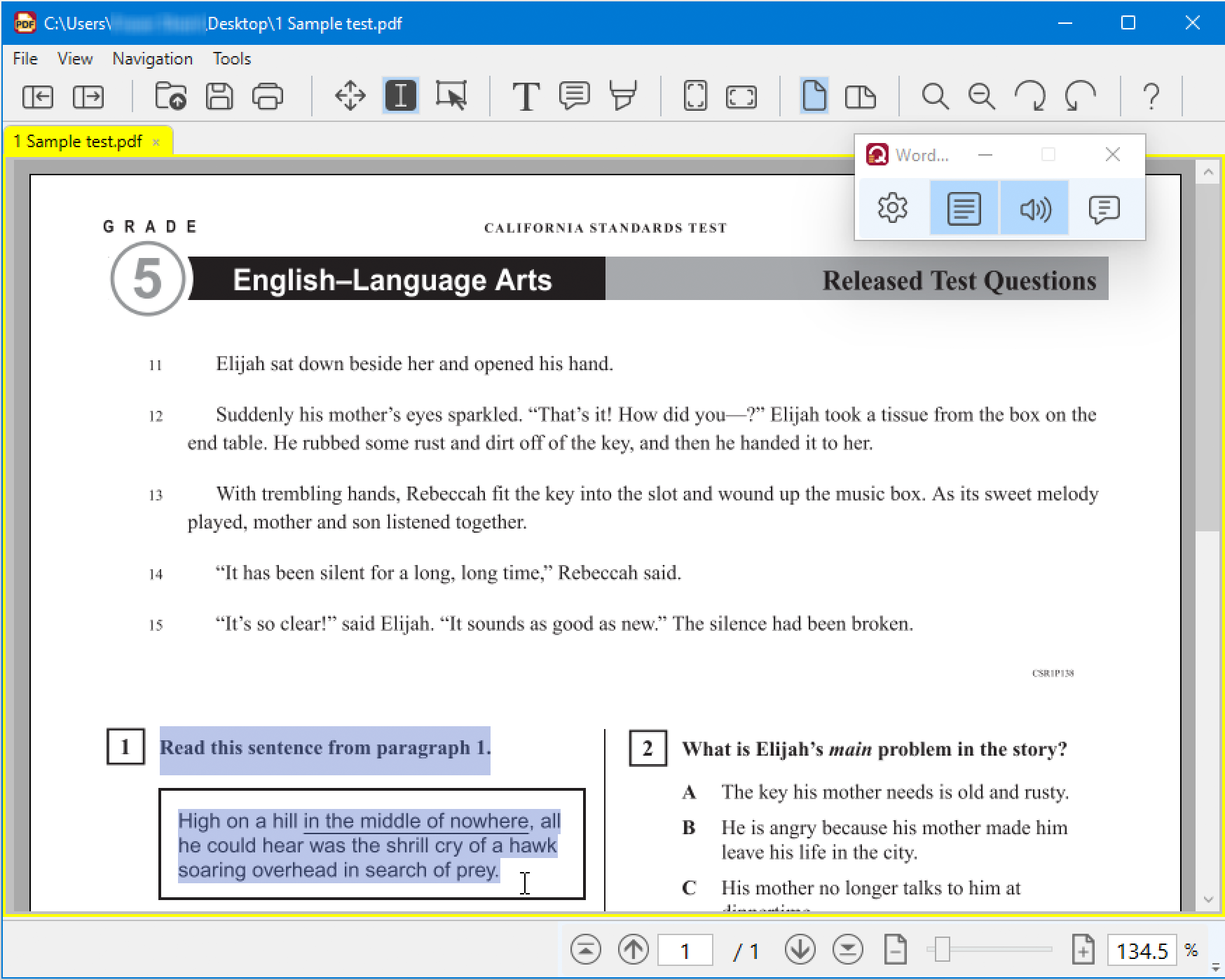
Use WordQ to access PDF documents with its built-in PDF Reader/Editor
Static Topics or Word Banks in WordQ
Static topics or word banks are invaluable tools in the writing process. They stimulate creativity, enhance vocabulary, improve organization, help overcome writer’s block, and support consistency and relevance, all of which contribute to more effective and engaging writing. Static topics are different from the ThoughtQ’s dynamic topics in that they are hand-curated, and therefore, can be more specific to the student’s needs.
You can easily create a personalized topic list; typically, at the beginning of the writing process. They are emphasized in blue color in the word prediction list when a topic is active. These hand-generated lists are stored with your personal WordQ settings.
A topic list can be created in several ways:
one-by-one
from a list in a text file
automatically extracted from text copied to the clipboard
from ThoughtQ, or
from a combination of the above
The Importance of Using Word Banks in the Writing Process
Word banks, or collections of related words and phrases, play a crucial role in the writing process. They provide a structured approach to organizing thoughts, developing ideas, and enhancing the overall quality of writing. Here are several key reasons why using word banks or a list of topic words is important:
Stimulating Creativity and Generating Ideas
Word banks serve as a springboard for creativity. When writers encounter a word or phrase within a word bank, it can spark new ideas or perspectives they might not have considered. This can be particularly useful in brainstorming sessions, where the goal is to generate a broad range of ideas quickly. By seeing a variety of related words, writers can make connections between concepts, leading to more innovative and original writing.
Enhancing Vocabulary and Precision
Using word banks helps writers expand their vocabulary. Access to a variety of related terms allows writers to choose words that precisely convey their intended meaning, rather than relying on general or overused terms. This enhances the clarity and impact of their writing. Additionally, a richer vocabulary enables writers to express themselves more eloquently, making their work more engaging and effective.
Improving Organization and Structure
Word banks help writers organize their thoughts. By categorizing words and phrases around specific topics, writers can more easily structure their work. This is particularly beneficial in complex writing tasks, such as essays or research papers, where ideas need to be presented in a logical and coherent manner. Word banks provide a framework that guides the flow of information, ensuring that all relevant points are covered systematically.
Overcoming Writer’s Block
Writer’s block, a common challenge for many writers, can be effectively addressed with word banks. When writers are stuck or struggling to start, a list of topic-related words can provide the necessary nudge to get the creative process flowing again. The presence of these words reduces the intimidation of a blank page and helps writers focus on specific aspects of their topic.
Supporting Consistency and Relevance
Word banks ensure that writing remains focused and relevant to the topic. By consistently referring to the key terms in a word bank, writers can avoid going off on tangents and maintain a clear focus on their subject matter. This not only makes the writing more coherent but also ensures that the content aligns with the purpose of the writing task.